
Why Good Interview Answers Aren't Enough
Most job seekers focus on giving the right answers. Employers are focused on something else: whether they can picture you succeeding in the role. The strongest candidates don't just answer questions well—they make their fit impossible to miss.

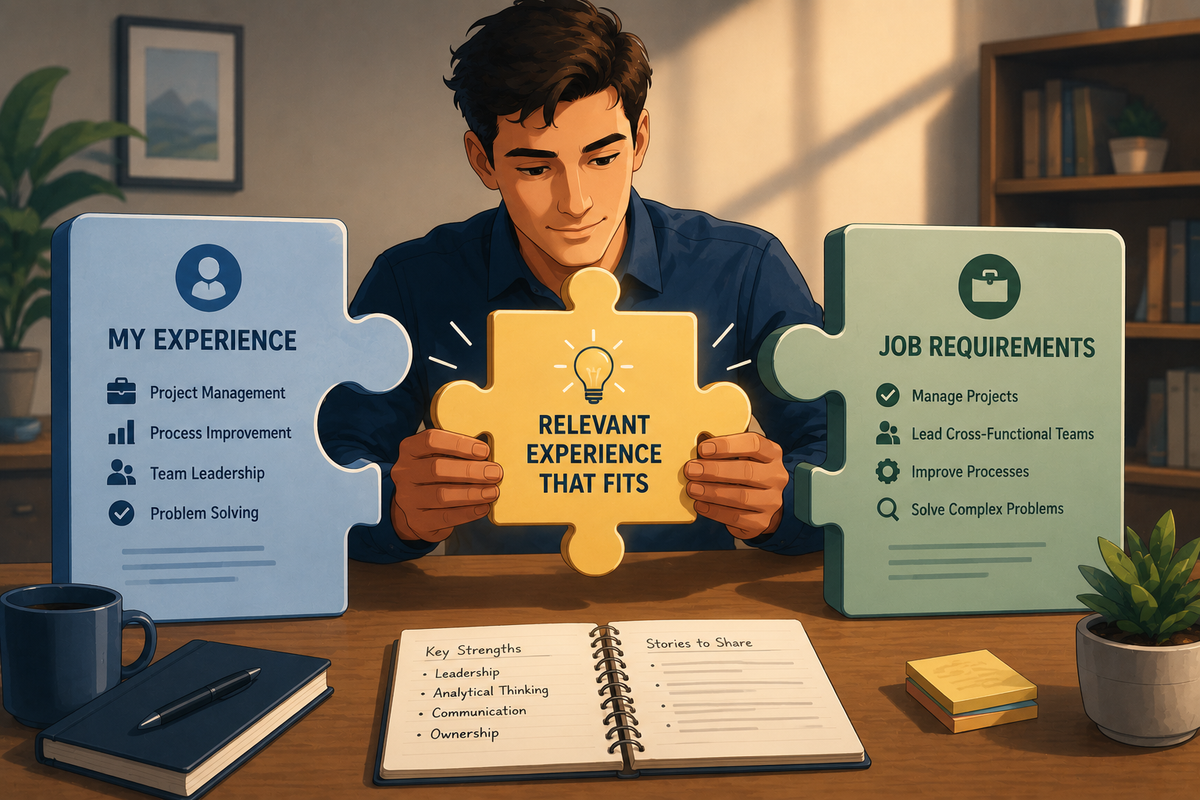
One of the most common misconceptions about interviewing is that success comes down to having the right answers.
Job seekers spend hours preparing for common questions. They practice responses to "Tell me about yourself." They rehearse examples of leadership, teamwork, conflict resolution, and problem-solving. They refine their stories until they can deliver them smoothly and confidently.
On the surface, this seems like exactly the right approach.
After all, interviews are built around questions and answers.
The problem is that employers aren't evaluating answers in isolation.
They're evaluating whether they can picture you doing the job.
That's an important distinction because it changes how interviews should be approached.
Most hiring managers have interviewed plenty of candidates who gave good answers. They were articulate. They were prepared. They had relevant experience. Yet something still felt missing. The conversation never quite created a clear picture of how that person's background connected to the role they were trying to fill.
At the same time, many candidates who receive offers aren't necessarily the most polished interviewers. They stumble occasionally. They pause to think. Their answers aren't always perfect.
What they do exceptionally well is make the connection between their experience and the employer's needs obvious.
That's what employers are really looking for.
Consider two candidates interviewing for the same position.
Both have similar experience. Both answer questions competently. Both appear professional and prepared.
The first candidate responds to a question about problem-solving by describing a challenging project from a previous role. It's a good example and demonstrates several valuable skills.
The second candidate describes a similar situation, but frames the answer around challenges that closely resemble the responsibilities listed in the job description. The example feels directly relevant to the work they'll be doing if they're hired.
Neither answer is objectively wrong.
But one answer requires the interviewer to make the connection themselves.
The other makes the connection effortless.
That difference matters more than many candidates realize.
Hiring managers are constantly translating information during interviews. They're listening to examples and asking themselves questions like:
- Can this person handle the responsibilities of the role?
- Have they solved problems similar to ours?
- Would they be successful in our environment?
- Can I confidently explain this hiring decision to my team?
The easier you make those questions to answer, the stronger your interview becomes.
This is why focusing exclusively on interview technique can be misleading.
Technique matters. Being able to communicate clearly matters. Preparation matters.
But none of those things can compensate for a lack of relevance.
A perfectly delivered answer that doesn't connect to the role is less valuable than a slightly imperfect answer that directly addresses the employer's priorities.
The strongest interview preparation starts long before the interview itself.
It begins with understanding the role. What responsibilities are being emphasized? What problems is the company trying to solve? What skills appear repeatedly throughout the job description? Which parts of your experience align most closely with those needs?
Once those questions are answered, preparation becomes much more focused.
Instead of trying to anticipate every possible interview question, you're identifying the examples and experiences that best demonstrate your fit for that specific opportunity. You're building a bridge between your background and the employer's needs.
That's where confidence comes from.
Not from memorizing answers.
Not from trying to sound impressive.
From knowing that the experiences you're discussing are genuinely relevant to the conversation.
This is also why generic interview preparation often falls short. Generic advice can help you become a better interviewer overall, but employers aren't hiring a generic candidate. They're hiring someone for a specific role with specific requirements.
The closer your preparation gets to those requirements, the more effective it becomes.
That's one of the ideas behind Trackplicant's Role-Specific Mock Interviews. Instead of practicing broad interview questions that could apply to almost anyone, candidates can prepare using questions generated from the actual job description and their own experience. The goal isn't to memorize responses. It's to become better at connecting relevant experience to the opportunity in front of you.
Because successful interviews aren't usually won by the candidate with the most polished answers.
They're won by the candidate who makes the strongest case that they're the right person for the role.
A good answer shows what you've done.
A relevant answer shows why it matters.