
The Biggest Mistake Job Seekers Make After Landing an Interview
Most job seekers spend weeks trying to get interviews and only hours preparing for them. The problem isn't effort—it's that interview preparation is often generic when it needs to be specific to the role. A great application gets you the interview. Preparation helps you turn it into an offer.

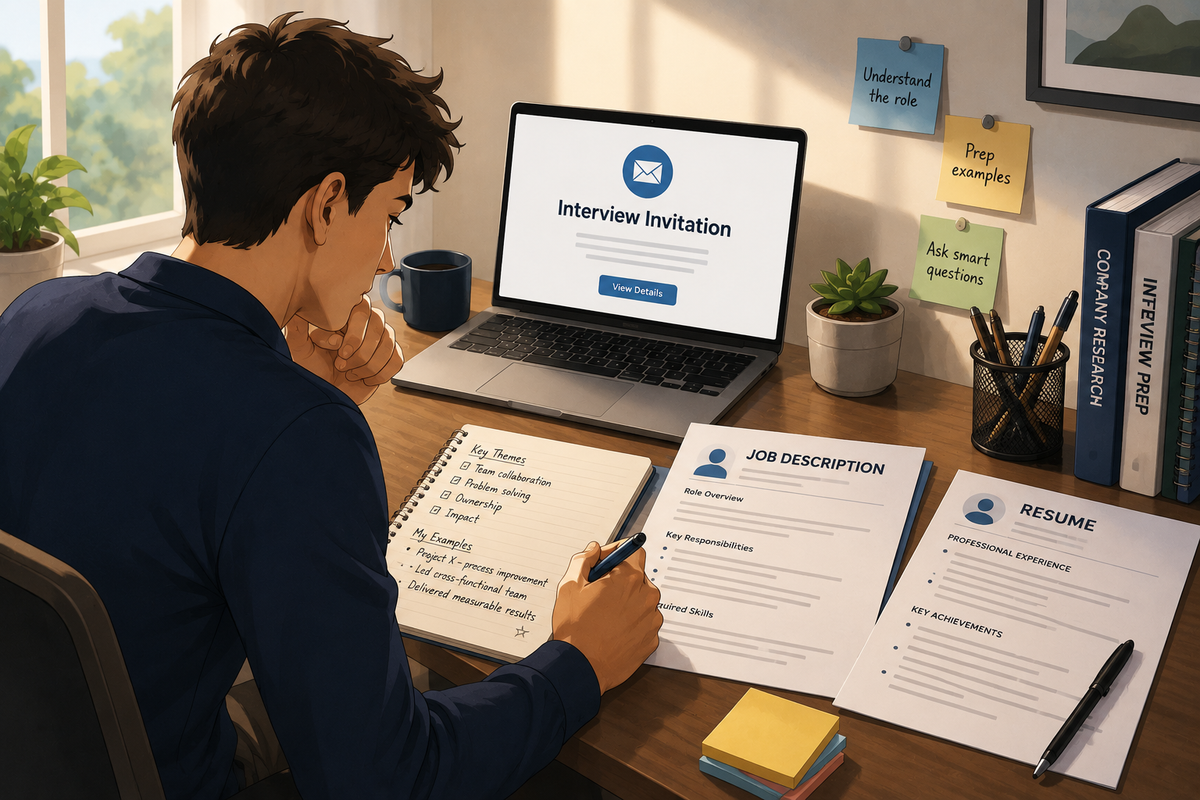
Most job seekers spend the majority of their energy trying to get an interview.
That makes sense. The application process is often frustrating, slow, and unpredictable. Weeks can pass without a response. Applications disappear into online portals. Recruiters go silent. After enough time, simply receiving an interview invitation can feel like a breakthrough.
It's easy to view that moment as proof that the hardest part of the process is over.
In reality, it's the beginning of a different challenge entirely.
The skills that help someone secure an interview are not always the same skills that help them succeed in one. A strong resume can open a door, but once the conversation begins, employers are evaluating something much broader. They're looking for evidence that a candidate can solve problems, communicate effectively, and perform the specific responsibilities of the role.
That's where many job seekers run into trouble.
After spending weeks tailoring applications, refining resumes, and searching for opportunities, interview preparation often becomes surprisingly informal. A candidate might review the company website, skim through a few common interview questions, and spend some time thinking about their previous experience. It feels like preparation because preparation is happening.
The problem is that it's often preparation for interviews in general rather than preparation for the interview that's actually coming.
Those are not the same thing.
Every interview is built around a specific role. The responsibilities listed in the job description influence the questions being asked. The challenges facing the team influence what examples will resonate. Even two positions with the same title can lead to dramatically different conversations depending on the organization and its priorities.
Yet many candidates prepare as though interviews are largely interchangeable.
They practice answering questions they found online. They memorize polished responses to common prompts. They focus on delivering answers smoothly rather than ensuring those answers are relevant to the role in front of them.
The result is a subtle mismatch.
The candidate may have the right experience, but they're not presenting it through the lens the employer is using to evaluate them.
This is one of the reasons interviews can feel so unpredictable. A candidate leaves convinced they performed well, only to receive a rejection a week later. Another candidate feels they stumbled through several answers and somehow receives an offer. What often determines the outcome isn't confidence or even experience alone. It's whether the employer can clearly see the connection between the candidate's background and the problems they're trying to solve.
The strongest interview preparation focuses on making that connection obvious.
Instead of preparing generic answers, strong candidates prepare examples that directly relate to the responsibilities described in the role. Instead of studying interview questions in isolation, they study the context behind those questions. They think about what the employer is actually trying to learn and how their experience demonstrates it.
That shift changes everything.
Answers become more relevant because they're grounded in the position being discussed. Examples are easier to recall because they've already been connected to the role. Confidence increases because preparation is tied to a real opportunity rather than a hypothetical conversation.
Most importantly, the interview becomes less about reacting and more about communicating.
This is why interview preparation should be treated as part of the job search system rather than something that happens separately. The same job description that informed your application should inform your preparation. The same understanding of the role that helped you tailor your resume should help you anticipate the conversation.
The process is connected, even though many job seekers treat it as separate stages.
That connection is what turns preparation into performance.
This idea played a major role in the development of Trackplicant's Role-Specific Mock Interviews. Instead of practicing with generic interview questions, candidates can prepare using realistic questions generated from the job description and their own experience. The goal isn't to memorize answers. It's to build familiarity with the conversation they're most likely to have.
Because the interview isn't a reward for a successful application.
It's the next stage of the process.
And the candidates who perform best are usually the ones who prepare for that specific opportunity—not interviews in general.
A great resume can get you into the room.
Preparation is what helps you make the most of being there.