job search strategy
Why You Need to Treat Your Job Search Like a Pipeline
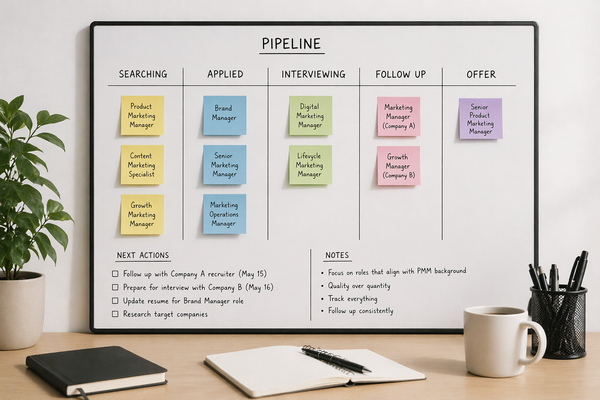
Most job searches are treated like a checklist—but that’s why they break down. The real shift happens when you start managing your job search like a pipeline.
job search strategy
Most job searches are treated like a checklist—but that’s why they break down. The real shift happens when you start managing your job search like a pipeline.
job search strategy
Most job applications don’t end in rejection—they end in silence. The real problem isn’t getting rejected. It’s getting forgotten.
job application tracking
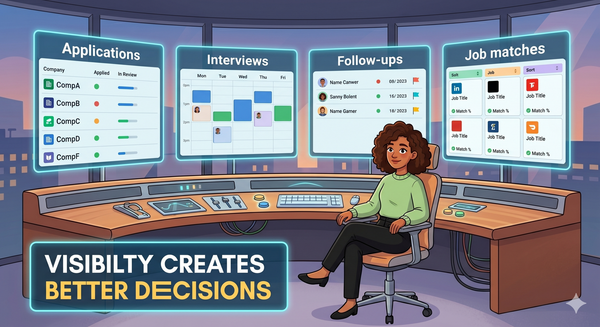
Most job searches don’t fail in obvious ways—they drift. Without visibility into what’s happening, opportunities are lost quietly. Tracking is what turns effort into something that actually builds.
job search strategy
A high-performing job search doesn’t look different on the surface—it’s built differently underneath. The difference isn’t effort. It’s whether your process allows that effort to compound.
job search strategy
Most job searches don’t fail at the start—they fade out after a few weeks. Not because of motivation, but because the process breaks down as complexity increases.
job search strategy
There’s no shortage of job search advice—but most of it doesn’t translate into results. The real problem isn’t what you know. It’s whether your process allows you to execute consistently.
job search strategy
More job leads feel like progress—but they often make your job search worse. The real advantage isn’t more opportunities. It’s making better decisions about the ones you already have.
job search strategy
Auto-apply tools promise more applications with less effort—but they’re optimizing for the wrong thing. If your goal is interviews, volume isn’t the advantage you think it is.
job search strategy
You’re applying, updating your resume, and putting in the effort—but nothing seems to move. The problem isn’t how hard you’re working. It’s that your job search isn’t built to produce results.