
What a High-Performing Job Search Actually Looks Like
A high-performing job search doesn’t look different on the surface—it’s built differently underneath. The difference isn’t effort. It’s whether your process allows that effort to compound.

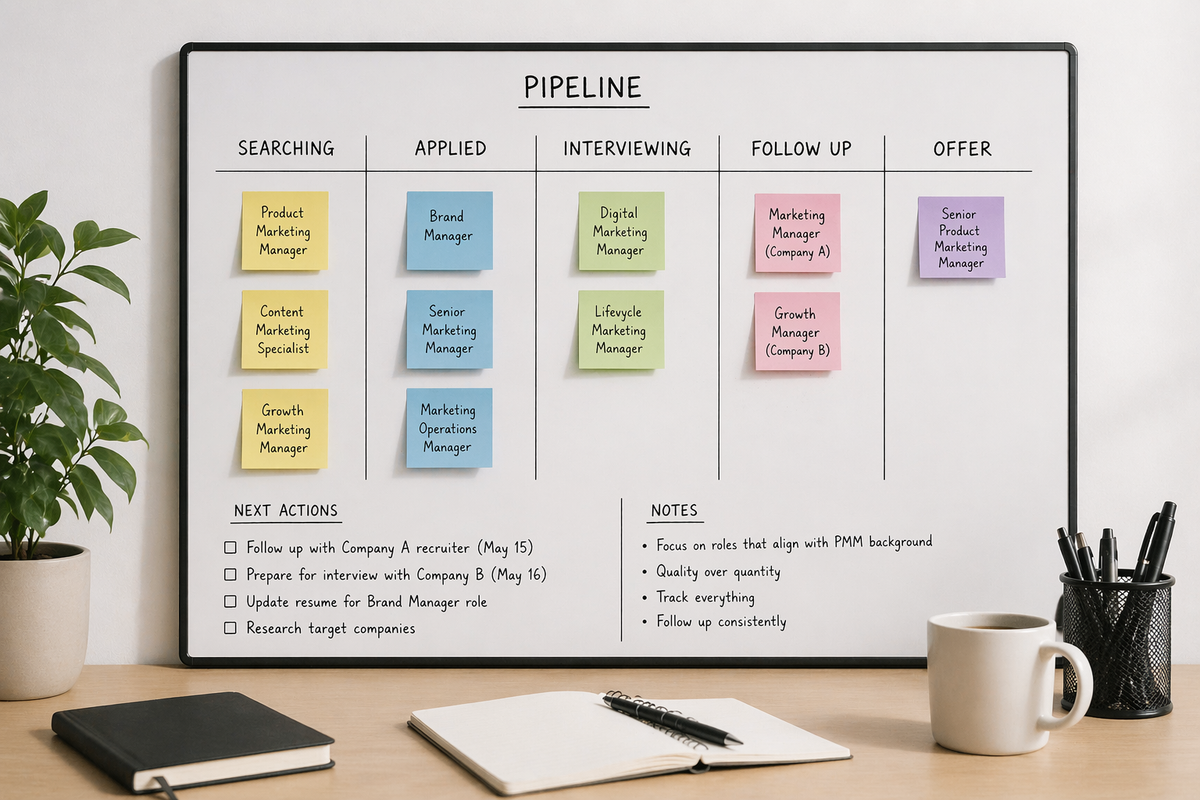
Most job searches don’t fail because of a lack of effort.
If anything, people tend to overcommit early. They update their resume, set up alerts, apply to a number of roles, and try to follow the advice they’ve been given. The work is there, and so is the intention. But after a few weeks, the experience starts to feel inconsistent. Momentum fades, decisions become less deliberate, and the process becomes harder to manage.
What’s missing isn’t effort. It’s a clear model of what a well-functioning job search actually looks like.
Without that model, it’s easy to fall into patterns that feel productive but don’t lead anywhere. Applying broadly instead of selectively. Restarting the process when momentum drops. Constantly adjusting without any real sense of whether those adjustments are improving outcomes. The activity continues, but it doesn’t build.
A high-performing job search doesn’t necessarily look different on the surface. You’re still applying to roles, refining your materials, and following up. The difference isn’t in the actions themselves, but in how those actions are connected.
In most job searches, each application is treated as a separate event. You find a role, apply, and move on. What happens next is uncertain and often untracked. Over time, details blur together. It becomes difficult to remember what you’ve applied to, what needs attention, and what the next step should be.
In a high-performing job search, those same actions are part of a system. Each opportunity has a place. Each step leads to the next. Nothing is left to memory, and nothing is disconnected from what came before it. That continuity changes the experience in ways that aren’t immediately obvious but become more significant over time.
When you can see your job search clearly—when applications are tracked, statuses are defined, and follow-ups are visible—you stop reacting to whatever happens next and start managing what’s already in progress. Decisions become more deliberate because they’re made in context. You’re not just choosing whether to apply to a role; you’re deciding how it fits into everything else you’ve already done.
That visibility also changes how progress feels. One of the most frustrating aspects of a job search is the lack of feedback. You apply, and then wait. It’s difficult to know what’s working, what isn’t, and whether you’re getting closer to a result. Without structure, there’s no way to connect your actions to outcomes.
With structure, patterns begin to emerge. You start to see which types of roles generate responses, where conversations tend to stall, and which approaches lead to better results. The process doesn’t become predictable, but it becomes understandable. And once something is understandable, it can be improved.
This is also where consistency stops being a matter of discipline and starts being a matter of design. If your process depends on remembering everything, deciding everything in the moment, and managing multiple moving parts without support, it will eventually break down. Not because you’re unwilling to do the work, but because the process itself isn’t built to sustain it.
A high-performing job search reduces that friction. It creates a workflow where the next step is clear, where follow-ups are part of the process rather than an afterthought, and where progress doesn’t depend entirely on motivation. The effort doesn’t change, but the way it’s applied does.
Over time, that difference compounds. Two people can spend the same amount of time on a job search and get very different results. The difference isn’t usually knowledge or capability. It’s whether their effort is being applied within a system that allows it to build.
Once you see that distinction, it becomes difficult to ignore. You start to notice the gaps—not in what you’re doing, but in how it’s being managed. Opportunities that aren’t being followed up, applications that aren’t being tracked, decisions that are made without enough context. The problem isn’t that nothing is happening. It’s that nothing is being connected.
That’s the difference between effort and execution.
This is the model we built Trackplicant around. Not helping you do more, but helping you operate your job search as a system—one where every application is tracked, every opportunity is visible, and every action contributes to forward progress.
If your job search feels inconsistent or difficult to manage, the issue usually isn’t effort. It’s structure.
Because once your job search is structured, everything else starts to work.