
Why Confidence Isn't Something You Find—It's Something You Build
Confidence isn't something you're born with or suddenly discover before an interview. It's built through preparation, repetition, and experience. Here's why the most confident candidates usually have one thing in common: they've practiced.

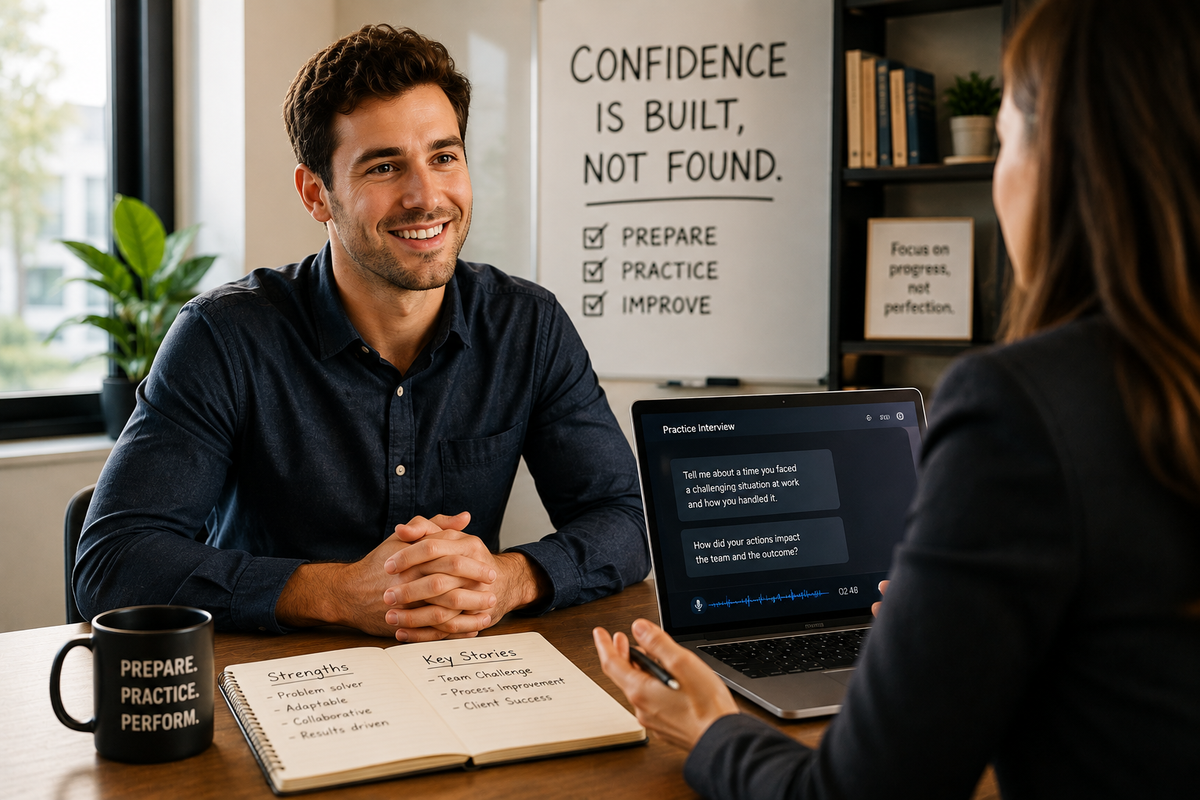
Everyone wants to feel confident before an interview.
It's one of the most common pieces of career advice you'll hear. Friends encourage you to "be confident." Articles tell you to project confidence. Interview coaches explain that confidence leaves a lasting impression on hiring managers.
All of that is true.
The problem is that almost nobody explains where confidence actually comes from.
It often gets treated like a personality trait, as though some people naturally possess it while others simply don't. Spend enough time watching charismatic speakers or experienced professionals and it's easy to believe they've always been comfortable walking into unfamiliar rooms, introducing themselves to strangers, and answering difficult questions under pressure.
The reality is usually much less mysterious.
Most confident people weren't born that way.
They became that way through repetition.
Think about the first time you drove a car.
Every movement required conscious thought. You checked the mirrors repeatedly, gripped the steering wheel tighter than necessary, and probably found yourself mentally narrating each step as you approached an intersection. There was nothing natural about it. It demanded your full attention.
Now think about driving today.
You still pay attention, but most of the mechanics have disappeared into the background. Your confidence isn't the result of positive thinking. It's the result of experience. You've encountered enough traffic lights, lane changes, and unexpected situations that your brain has learned what "normal" looks like.
Interviewing works in much the same way.
The first few interviews in your career often feel overwhelming because almost everything is unfamiliar. You're trying to remember your examples, interpret the interviewer's reactions, think of thoughtful questions, and decide whether your answers are making sense—all at the same time. Your brain is processing dozens of new situations simultaneously.
That's exhausting.
It also explains why people often mistake nervousness for lack of ability.
The two aren't the same thing.
In fact, many highly qualified candidates become nervous precisely because they care deeply about the opportunity in front of them. They aren't struggling because they lack experience. They're struggling because the stakes feel high.
The encouraging part is that confidence rarely arrives all at once.
It grows quietly.
You notice that you're no longer worried about introducing yourself. Behavioral questions become easier because you've told those stories before. Instead of searching for the "perfect" answer, you begin having genuine conversations about your work. Little by little, interviewing starts feeling less like a performance and more like discussing something you know well—your own career.
That's the point where confidence becomes visible to other people.
Ironically, it often appears long after you've stopped thinking about it.
Professional athletes understand this better than almost anyone. They don't build confidence during championship games. Musicians don't develop confidence while standing under the spotlight. Actors don't become confident during opening night.
They practice.
Not because practice makes them perfect, but because it makes unfamiliar situations feel familiar.
The same principle applies to interviews.
Every practice conversation, every thoughtful reflection after an interview, and every opportunity to improve your communication makes the next interview feel a little less intimidating than the last. The confidence you're looking for isn't waiting somewhere in the future.
It's being built every time you prepare.
That's one of the reasons Trackplicant includes AI-powered Practice Interviews. The goal isn't to teach scripted answers or encourage candidates to sound rehearsed. It's to create opportunities for meaningful practice so that real interviews feel more like conversations and less like high-pressure performances. When you've practiced explaining your experience, discussing difficult situations, and thinking through challenging questions, confidence becomes a byproduct of preparation rather than something you hope appears at the right moment.
Because confidence isn't magic.
It isn't personality.
And it certainly isn't luck.
It's the quiet result of showing up, practicing deliberately, and improving one conversation at a time.
The next time someone tells you to "be more confident," remember this:
Confidence isn't something you bring into an interview.
It's something you've been building long before you walked through the door.